


- Joined
- 6 May 2024
- Messages
- 3
- Reaction score
- 1
- Points
- 3
A Virtual Router is a software-based router deployed on a VPS or cloud server. Unlike traditional proxy clients and proxifiers, it operates as a full-fledged network node between your device and the Internet, handling all network traffic processing.
Most IP-changing solutions are essentially limited to forwarding traffic through a proxy or VPN. As a result, the overall structure of network communication remains characteristic of local proxying. Websites and online services can analyze not only the IP address, but also numerous indirect factors, including routing characteristics, DNS requests, connection parameters, latency, packet flow behavior, and the overall pattern of network traffic.
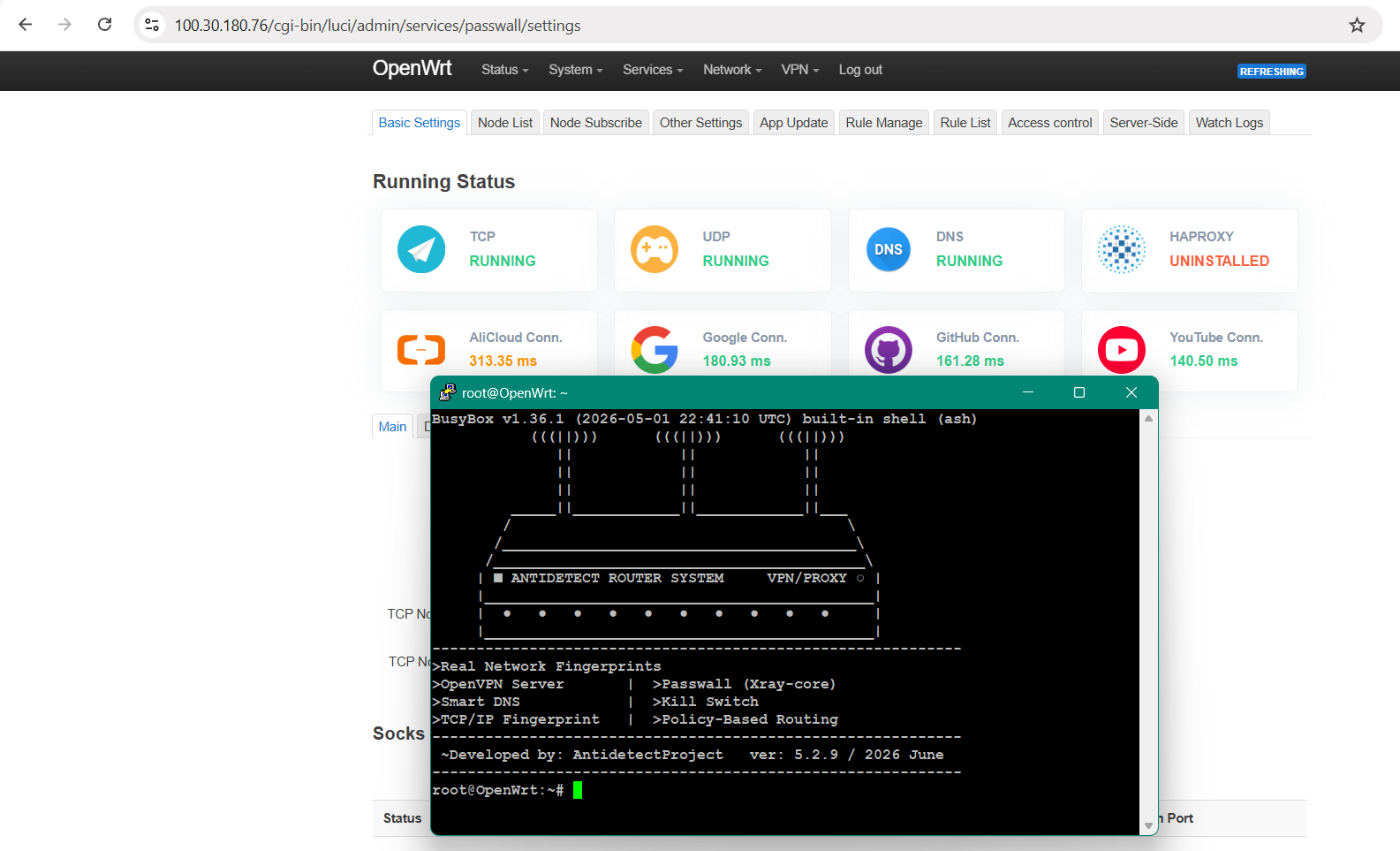
The Virtual Router uses a complete network infrastructure based on the real OpenWRT router operating system, creating a more natural connection model. To websites and online services, the traffic appears as if the user is actually located in the target region and connected through a regular Internet Service Provider rather than a collection of local IP-masking tools.
Instead of simple proxying, a complete network environment is created where routing, DNS handling, VPN tunnels, and traffic processing take place at the level of a dedicated router. As a result, network behavior becomes more consistent and closer to that of a real user connection.
The solution operates at the Network Layer (Layer 3) and Transport Layer (Layer 4) of the OSI model, controlling packet routing before traffic reaches the browser or application. This approach allows not only changing the IP address, but also creating a more natural network profile while reducing indicators commonly associated with traditional local proxying.
The Virtual Router supports SOCKS5, HTTP(S), OpenVPN, and other popular protocols. It supports both IPv4 and IPv6, UDP, provides flexible DNS routing, allows quick switching between proxy and VPN configurations, and can centrally serve multiple devices, browsers, and virtual machines at the same time.
It can be connected to virtually any device or solution, including antidetect browsers, virtual machines, smartphones, and desktop computers. Proxying is supported for almost any operating system.
The Virtual Router comes fully configured and ready to use. I provide assistance with installation, configuration, and deployment on any VPS, and provide ongoing technical support.
For purchase inquiries and any other questions, you can contact me via Telegram: @Antidetectproject
I am frequently online.

Most IP-changing solutions are essentially limited to forwarding traffic through a proxy or VPN. As a result, the overall structure of network communication remains characteristic of local proxying. Websites and online services can analyze not only the IP address, but also numerous indirect factors, including routing characteristics, DNS requests, connection parameters, latency, packet flow behavior, and the overall pattern of network traffic.
The Virtual Router uses a complete network infrastructure based on the real OpenWRT router operating system, creating a more natural connection model. To websites and online services, the traffic appears as if the user is actually located in the target region and connected through a regular Internet Service Provider rather than a collection of local IP-masking tools.
Instead of simple proxying, a complete network environment is created where routing, DNS handling, VPN tunnels, and traffic processing take place at the level of a dedicated router. As a result, network behavior becomes more consistent and closer to that of a real user connection.
The solution operates at the Network Layer (Layer 3) and Transport Layer (Layer 4) of the OSI model, controlling packet routing before traffic reaches the browser or application. This approach allows not only changing the IP address, but also creating a more natural network profile while reducing indicators commonly associated with traditional local proxying.
The Virtual Router supports SOCKS5, HTTP(S), OpenVPN, and other popular protocols. It supports both IPv4 and IPv6, UDP, provides flexible DNS routing, allows quick switching between proxy and VPN configurations, and can centrally serve multiple devices, browsers, and virtual machines at the same time.
It can be connected to virtually any device or solution, including antidetect browsers, virtual machines, smartphones, and desktop computers. Proxying is supported for almost any operating system.
The Virtual Router comes fully configured and ready to use. I provide assistance with installation, configuration, and deployment on any VPS, and provide ongoing technical support.
For purchase inquiries and any other questions, you can contact me via Telegram: @Antidetectproject
I am frequently online.